
Modern tools to help you calculate credit score.
Social Media Declaration
A multi-stakeholder declaration addressing misinformation, hate speech, and digital rights — built by civil society for lasting change.

Try for free. No credit card required.
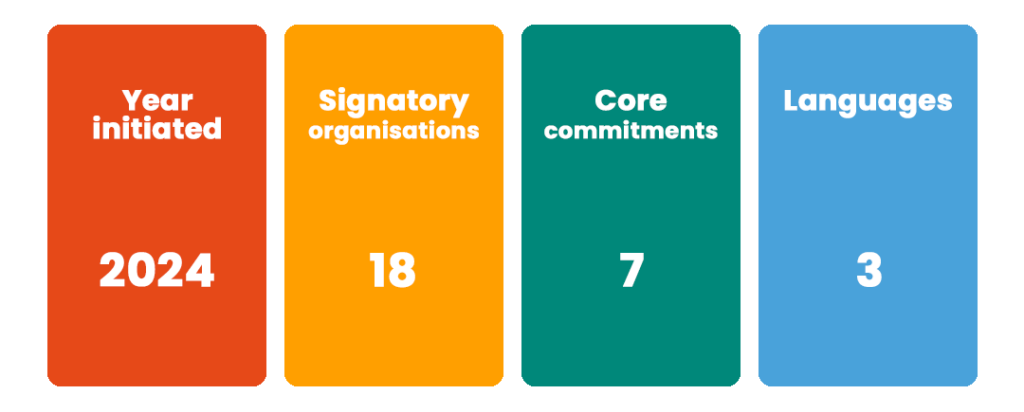

Key commitments
The declaration's core obligations, summarised for quick comprehension. Expand each for further detail.
Freedom of expressions and civic discourse
All signatories commit to protecting the right to free expression online, while acknowledging that certain categories of speech — incitement to violence, coordinated disinformation, and hate speech targeting ethnic or religious communities — require proportionate and transparent intervention.
Content moderation practices should be grounded in necessity and proportionality, with independent oversight mechanisms to prevent executive overreach.
Privacy, data protection, and user consent
Platforms operating in Sri Lanka should adhere to data minimisation principles and provide meaningful, informed consent mechanisms — not buried terms of service. Users must retain genuine control over how their personal data is collected, processed, and shared with third parties.
Platform transparency and accountability
Social media companies should publish regular transparency reports covering content moderation decisions, algorithmic curation practices, and advertising policies in all three national languages. Independent auditing of algorithmic systems that affect Sri Lankan users constitutes a baseline expectation.
Countering disinformation and hate speech
Signatories recognise the particular danger of disinformation campaigns in a post-conflict, multi-ethnic society. Responses must address root causes — including platform design incentives and algorithmic amplification — rather than relying solely on content removal, which risks silencing legitimate dissent.
Digital inclusion and accessibility
Equitable participation in online civic life requires bridging gaps across language, geography, gender, disability, and socio-economic position. Platform services must provide meaningful Sinhala and Tamil language support, and digital literacy initiatives should prioritise underserved communities.
Protection of children and vulnerable populations
Dedicated safeguards should protect minors and vulnerable groups from algorithmic exploitation, predatory advertising, and exposure to harmful content. Age-appropriate design standards and robust reporting mechanisms form part of this commitment.
Multi-stakeholder governance and oversight
DedicatEffective governance of social media requires sustained collaboration among government, civil society, academia, the private sector, and affected communities. No single actor should dominate regulatory processes. Independent oversight bodies must have the resources and authority to hold all parties accountable.ed safeguards should protect minors and vulnerable groups from algorithmic exploitation, predatory advertising, and exposure to harmful content. Age-appropriate design standards and robust reporting mechanisms form part of this commitment.
Declaration
The complete normative document. Hover over highlighted terms for definitions and contextual notes.
Social media are various Internet-based apps, websites and platforms which allow users to interact with each other, produce, present and promote content and affords, among other things, the ability to engage with audiences that are local, national, regional and global. Unrestrained by geographic boundaries, users of social media often enjoy or carve out freedom of expression beyond what their country, community or socio-political context may provide. This openness by default and design is both a positive and negative. Some users express themselves in a civil, progressive, respectful manner that engages with ideas and substance. Others do not. Some use social media for prosocial purposes, and to strengthen democracy. Others use it to undermine social cohesion, and increase division.
Social media gives users the opportunity to actively participate in conversations and social interactions using a range of media. Knowledge-sharing, creating critical dialogues, questioning authoritative mindsets and building alternative discourses are all possible, using expression ranging from the written to the visual. Social media also allows for collective activism, bearing witness, and organising as well as the presentation of opinion on crucial incidents and occurrences. Often, geospatial, political and other physical boundaries are seamlessly traversed in these interactions, with interlocutors and producers spread across various regions, time zones and countries continually complementing or contesting ideas in shared spaces.
At the same time, content published or promoted over social media often creates or exacerbates socio-political disparities inimical to the public interest, contributing over the longer term to a more regressive, repressive and renegade society. We note with concern, even in Sri Lanka, the sharp rise of online harms through content inciting hate and violence based on the grounds of gender, nationality, religion, caste or sexual orientation. A few voices and actors who are highly influential at instrumentalising social media for expedient goals, and parochial gain marginalise or violently erase dissenting opinions. Worldwide, reports indicate that the harmful impact and misuse of social media include sophisticated political influence campaigns, disinformation, and increasingly, the use of generative AI based synthetic media to undermine shared realities. Democratic foundations are at risk, with social media’s use to fuel polarisation, and truth decay.
Governments and social media companies are trying hard to address these growing challenges. What social media platforms say they are doing remains, often, far removed from what they actually do. On the other hand, authoritarian regimes appropriate the threat of disinformation to introduce legislation aimed at silencing dissent, while simultaneously amplifying propaganda online. Sri Lanka’s unprecedented, and draconian Online Safety Act (OSA) is a cogent example of legislation which is presented as protecting women, and children, but exists to completely stifle the freedom of expression.
This declaration is an attempt to recognise the inviolable importance of the freedom of expression on or over social media, yet at the same time, encourage and strengthen the ethical, progressive, democratic and prosocial use of social media.
Objective
To foster a community that encourages the responsible use of social media and the strengthening of digital literacy to allow for the right to access and an information- based society. While acknowledging the potential for social media to be misused, this Declaration recognises digital rights as intrinsic to a society founded on principles of social justice, human dignity and prominent human and social ideals, based on a ‘human rights’ framework.
Who?
The undersigned will promote as often and as best they can this mutually agreed-upon framework to others, across all social media platforms and digital spaces as well as in non- digital domains, including traditional media.
Why?
As an alternative to efforts, by legal or any other means, aimed at restricting human rights including the freedom of expression online.
As a platform to help interested stakeholders promote and protect a healthy conversational domain across social media platforms, encouraging a robust debate around ideas whilst maintaining a degree of respect for those whose opinions differ from one’s own.
As a tool, and template to raise awareness around the ethical and responsible use of social
To the best of our ability, and at all times across all social media platforms and domains we are a part of or interact in, we will act to minimize/eventually eradicate the generation and spread of the following:
- Discrimination based on race, religion or
- Gender-based violence (including sexism, sexual violence, misogyny and the non- consensual dissemination of intimate images ,video and other types of content) and other forms of discrimination against women.
- Sexual abuse, and the sharing of non-consensual intimate imagery (NCII) or child sexual abuse material (CSAM), including synthetic media created through generative AI.
- Harassment based on sexual orientation or gender identity.
- Content inciting hate or violence, threats, intimidation, cyber-bullying and dangerous speech.
- Harassing marginalised communities.
- Illegal
- Data theft and unethical abuse of sources of information and media (such as using photographs without permission).
- Misinformation, disinformation and other forms of misleading content.
We, the undersigned, will promote the following in order to improve the responsible, ethical and democratic use of social media, using a human rights-based framework:
- Protect and preserve an open, free internet, the right to information, and the freedom of
- The right to information and freedom of expression must be protected and preserved as inalienable digital rights.
- Preserve and protect affordances, spaces, opportunities, and platforms on social media that feature marginalised voices.
- Promote media and information literacy.
- Make social media a secure, protected and welcoming space for marginalised and at-risk communities, especially considering trends of misogyny, sexism, anti-LGBTQIA+, and violent threats directed at other minorities, and vulnerable identities.
- Respect, and protect privacy rights. Data practices should be consensual, necessary and proportional, and transparent to users who should retain complete control over their data.
- Uphold principles of information integrity (accuracy, consistency, reliability, fidelity, safety, transparency) and the respect human rights, social media can strengthen democracy and empower users.
- Increase language capacity for content moderation in local languages (both Sinhala and Tamil).
- Be transparent about the number of moderators assigned to deal with user generated reports around Sri Lankan content, their gender, language capacity and in which time zone they are located.
- Make clear commitments to review the majority of valid notifications for removal of hate speech inciting violence and hateful conduct in less than 24 hours and remove or disable access to such content, if necessary. During heightened violence, this timeframe must be further reduced.
- Have in place clear and effective processes to review notifications regarding hate speech on their services so they can remove or disable access to such content. Make public the tests and Rules or Community Guidelines clarifying that promotion of incitement to violence and hateful conduct is prohibited.
- Educate and raise awareness with users about the types of content not permitted. Make commitments to protect the privacy and security of users, through easily understandable and publicly available policies, in all local languages.
- New products should be tested to ensure that products are fit-for-purpose and do not constitute dangers to the users, or to Intensify cooperation between companies to enhance best practice sharing.
- Social media must remain an open platform for diverse voices, especially marginalised and underrepresented Algorithmic curation and content moderation should preserve spaces for these perspectives.
- Stronger safeguards against misogyny, racism, violent threats and harassment that disproportionately impact women and minorities.
- Clearly identify and label content generated or enhanced using Generative AI.
- Strengthen an online environment which upholds and protects human rights, including the freedom of expression, while promoting the accuracy, consistency, reliability, and transparency of information online.
- Honour the commitment made by the government on net neutrality and refrain from Internet slowdowns or shutdowns to ensure consistent access to information. (*Add the Foot Note)
- Implement existing international treaties such as the International Covenant on Civil and Political Rights (ICCPR) to which Sri Lanka is a signatory, when combating content inciting hate, violence, misinformation, gender-based violence, and discrimination online, while maintaining the fidelity of information and ensuring the safety of marginalised communities without misuse of the legal framework.
- Implement specific, comprehensive legislation on individual user privacy and data to ensure the safety and security of users’ personal information following international standards.
- Ensure any legal reform adheres to international standards with regards to the freedom of expression and promotes the accuracy, consistency, and reliability of information.
- Support research into the methods by which misinformation and disinformation are spread online, and work to add digital literacy into the national education curriculum to enhance users’ ability to assess the accuracy and reliability of information.
- Ensure that all political campaigning online, including through social media platforms, is clearly indicated as sponsored, bringing online advertisements and messages in line with physically published leaflets, , and advertisements to maintain transparency and fidelity of information.
- Support counter-messaging campaigns that provide accurate and reliable information to combat hate speech and misinformation while ensuring the safety of marginalised
- Advocate government to create a healthy, favorable environment to protect and uphold the rights of at-risk and marginalised communities, including across digital domains, in line with the United Nations Rabat Plan of Action’s emphasis on promoting inclusion, diversity, and pluralism.
- Support and act as advocates for long-term public awareness campaigns on media and information literacy and digital security, which will educate users on their digital rights within the context of current legislation. Advocate the Government to include digital literacy in the national curriculum.
- Expose and correct misinformation, and disinformation published on social media, in line with the media’s responsibility to report in context and in a factual and sensitive manner.
- Introduce comment moderation and content curation policies for official mainstream media websites and social media accounts that actively resist and combat hate speech,
Using generative AI tools, platforms or apps to ethically to create media content is crucial if we want credible, trusted, professional, and impartial civic media. Five key aspects we commit to are,
Transparency. AI-generated content will be clearly labelled so people know it didn’t wholly come from a human or is synthetic media – i.e., created completely by generative AI. This helps build, and retain audience trust.
Accuracy. Through so-called hallucinations, and biased visual output, generative AI can spread falsehoods, misinformation, and disinformation if not vetted carefully. Commit to fact, and bias check AI content before publishing using credible sources, and industry-standard means including new tools to aid in this process.
Accountability. Have clear remediation processes to fix issues if generative AI content causes harm. People affected, including readers, and consumers of media, should have ways to report, and contest inaccuracies.
Respect rights. Generative AI tools used must uphold ethical standards and fundamental human rights, including those enshrined in Sri Lanka’s constitution. They shouldn’t seed, spread, or sustain harmful biases and stereotypes.
Involve experts. Constantly review best practices, and get input from diverse groups like industry experts, academics, and civil society when governing generative AI use. Independent auditing, and oversight helps ensure it internal processes using, and external output involving generative AI serves the public interest.
Civic media should always use generative AI transparently, accurately and accountably with public oversight, to harness its potential while protecting democracy, and keeping the public informed.
Partners and signatories
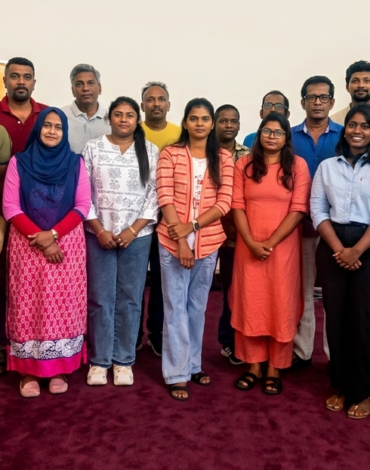
A collective effort across Sri Lanka's civil society landscape.



Have a question?
You’re covered.
Click edit button to change this text. Lorem ipsum dolor sit amet, consectetur adipiscing elit. Ut elit tellus, luctus nec ullamcorper mattis, pulvinar dapibus leo.
Click edit button to change this text. Lorem ipsum dolor sit amet, consectetur adipiscing elit. Ut elit tellus, luctus nec ullamcorper mattis, pulvinar dapibus leo.
Click edit button to change this text. Lorem ipsum dolor sit amet, consectetur adipiscing elit. Ut elit tellus, luctus nec ullamcorper mattis, pulvinar dapibus leo.
Click edit button to change this text. Lorem ipsum dolor sit amet, consectetur adipiscing elit. Ut elit tellus, luctus nec ullamcorper mattis, pulvinar dapibus leo.